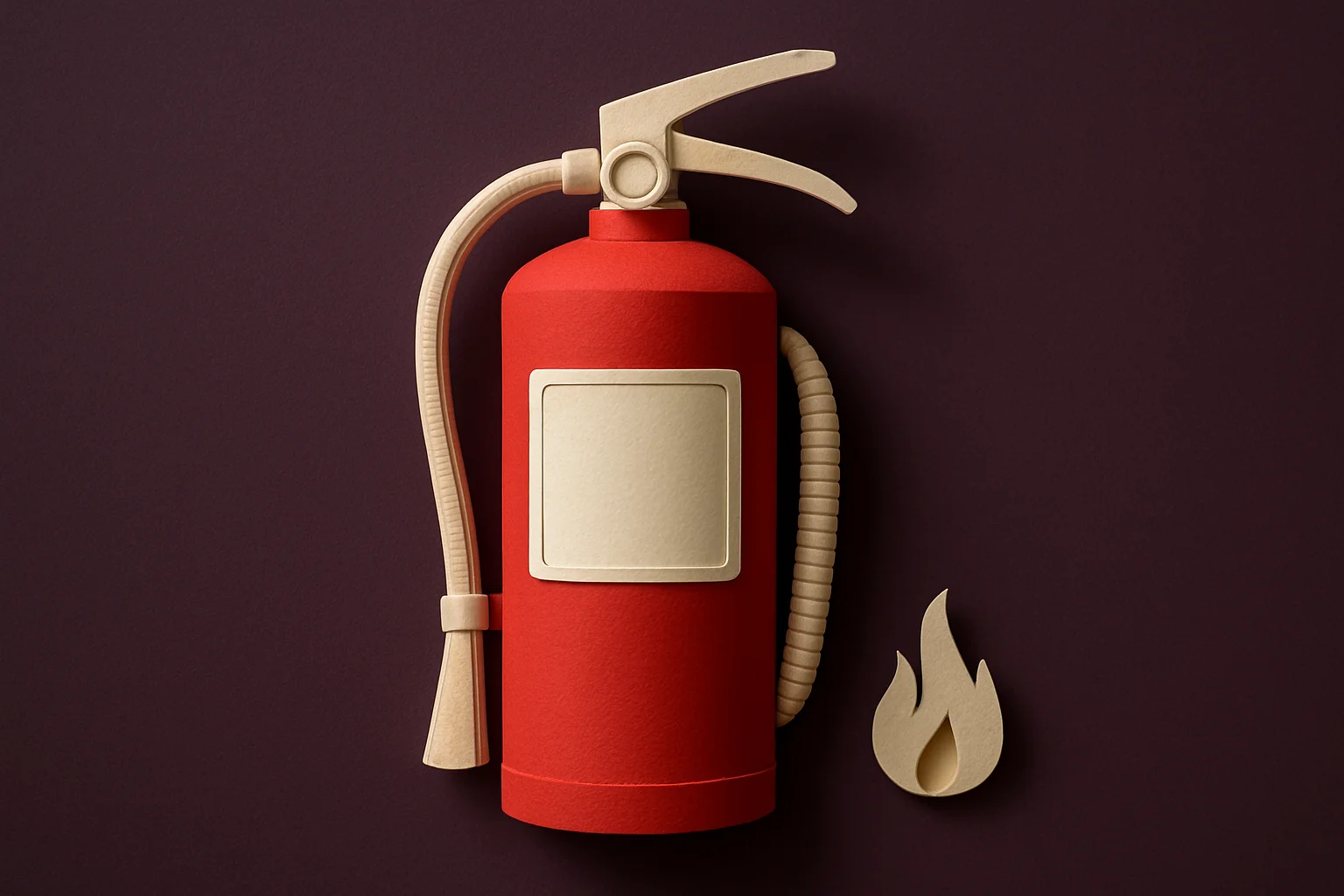
Employee Fire Safety Questionnaire
True / False
True / False
True / False
Select all that apply
True / False
Select all that apply
Select all that apply
Select all that apply
Put in order
Put in order
Put in order
Select all that apply
Put in order
Disclaimer
This quiz is for educational purposes only. It does not constitute professional advice. Consult a qualified professional for specific guidance.
Frequent Workplace Fire Safety Errors Employees Make (and How to Prevent Them)
1) Treating “small” hazards as harmless
Most workplace fires start from routine conditions: overloaded power strips, damaged cords, greasy buildup, or combustible storage near heat sources. Avoid “it’s fine for now” thinking—report hazards immediately and fix root causes (not just symptoms).
2) Blocking the first layer of response
Employees often create delays by placing boxes, carts, or furniture in front of:
- Exit doors and corridors (slower egress, crowding, trips)
- Pull stations (delayed alarm activation)
- Fire extinguishers (lost time locating equipment)
- Electrical panels (restricted shutoff access)
Do a quick “line of sight” check at the start/end of shifts in storage-heavy areas.
3) Using the wrong extinguisher—or using it at the wrong time
A common error is grabbing the closest extinguisher without matching it to the hazard (electrical equipment, cooking oils, flammable liquids). Another is attempting to fight a growing fire. Only attempt extinguishment when the fire is small, you are trained, the correct extinguisher is available, and you have a clear exit behind you.
4) Evacuating without executing the basics
People skip essentials under stress: closing doors behind them, using stairs (not elevators), checking alternative exits if smoke blocks the primary route, and going to the correct assembly point. Practice drills as real movements—not as a walk outside—so your route choice and headcount process become automatic.
Employee Fire Safety Quick Reference: Prevent, Alarm, Evacuate, Extinguish (When Appropriate)
Printable note: Save or print this page as a PDF and keep it near your workstation or in your onboarding binder.
Prevent: daily habits that reduce ignition and fuel
- Keep egress clear: corridors, exit doors, stairwells, and access to pull stations/extinguishers.
- Electrical safety: avoid daisy-chaining power strips; replace frayed cords; keep panels unobstructed.
- Combustible control: store paper/cardboard away from heat sources; manage dust; dispose of oily rags properly.
- Fire doors: never wedge open; report doors that don’t latch.
Alarm + notification: act fast, communicate clearly
- Activate the building alarm as soon as you confirm fire/smoke or a credible fire indicator.
- Call the site emergency number or 911 per your workplace procedure (give location, floor/room, what’s burning, any trapped persons).
- Warn nearby coworkers while moving toward an exit; avoid shouting conflicting instructions.
Evacuate: the essentials under pressure
- Use stairs, not elevators.
- Stay low in smoke and move to the nearest safe exit (switch routes if smoke/heat blocks the way).
- Close doors behind you if safe to do so (slows smoke and fire spread).
- Go to your assembly point and stay there for headcount.
- Do not re-enter until authorized by responders or site leadership.
Extinguish (only if all conditions are met)
- Fire is small and contained (incipient stage), no heavy smoke.
- You have the correct extinguisher type for the hazard.
- You are trained, and you have a clear exit behind you.
PASS method: Pull pin, Aim at base, Squeeze, Sweep side-to-side. Stop and evacuate if the fire doesn’t immediately diminish or smoke increases.
Workplace Roles-to-Skills Map: What the Fire Safety Questionnaire Measures on the Job
All employees (office, warehouse, retail, healthcare, light industrial)
- Task: Identify everyday fire hazards (cord damage, blocked exits, improper storage). Skill assessed: hazard recognition and reporting pathways.
- Task: React to alarms and cues (smell of smoke, visible haze, unusual heat). Skill assessed: early recognition and correct escalation.
- Task: Evacuate quickly without causing bottlenecks. Skill assessed: route selection, stairwell use, door management, assembly-point discipline.
Supervisors, team leads, and floor wardens
- Task: Direct calm, consistent movement to exits. Skill assessed: communicating instructions, preventing re-entry, supporting headcount.
- Task: Confirm areas are cleared where assigned (without taking undue risk). Skill assessed: role boundaries, prioritizing life safety over property.
Reception, security, and front-desk coverage
- Task: Provide location details to responders and guide them to the incident area. Skill assessed: precise incident reporting, access control, visitor accountability.
Facilities, maintenance, and lab/shop personnel
- Task: Control higher-risk fuel and ignition sources (flammable liquids, hot work, equipment overheating). Skill assessed: matching extinguisher classes to hazards, safe shutdown decisions, keeping suppression systems unobstructed.
Remote/hybrid employees onsite occasionally
- Task: Navigate unfamiliar exits and assembly points. Skill assessed: pre-planning, signage comprehension, drill participation.
Employee Fire Safety Questionnaire FAQ: Extinguishers, Alarms, Exits, and Drill Expectations
When is it appropriate for an employee to use a fire extinguisher instead of evacuating?
Use an extinguisher only for a small, contained fire in the early stage, when you are trained, you have the correct extinguisher for the hazard, and you can keep a clear exit at your back. If smoke is building, the fire is spreading, or you’re unsure what’s burning, prioritize evacuation and alarm activation.
What’s the most important action if you discover smoke or a fire and no one else seems aware?
Initiate the alarm and notify according to your site procedure as quickly as possible, then begin evacuation. Early alarm activation is what triggers a coordinated response, clears exit routes sooner, and reduces the chance that someone walks into a smoke-filled area.
How do I decide which exit route to take if my usual corridor looks smoky?
Switch immediately to an alternate marked exit route and use stairs. Smoke conditions can change fast; don’t try to “push through” limited visibility. If you must move through light smoke, stay low, keep contact with a wall for orientation, and close doors behind you when safe to slow smoke spread.
Why is going to the assembly point non-negotiable, even when the alarm seems minor?
The assembly point is where accountability happens. If you leave the area or go to your car, responders and leaders may assume you’re missing and risk sending someone to search. Staying put also prevents re-entry before the building is cleared.
What fire safety topics does this questionnaire overlap with in broader emergency training?
Fire response sits inside wider incident readiness—communications, evacuation leadership, and situational decision-making. If you want to extend practice beyond fire scenarios, review the Workplace Emergency Preparedness Quiz and the Emergency Quiz for multi-hazard response patterns.
What should I do if I notice exits, extinguishers, sprinklers, or pull stations are blocked during normal work?
Remove the obstruction if it’s safe and within your role, then report it through your workplace safety channel so it gets corrected and doesn’t recur. Treat repeated blocking as a process problem (storage layout, deliveries, housekeeping schedules) that needs a permanent fix, not just a one-time cleanup.