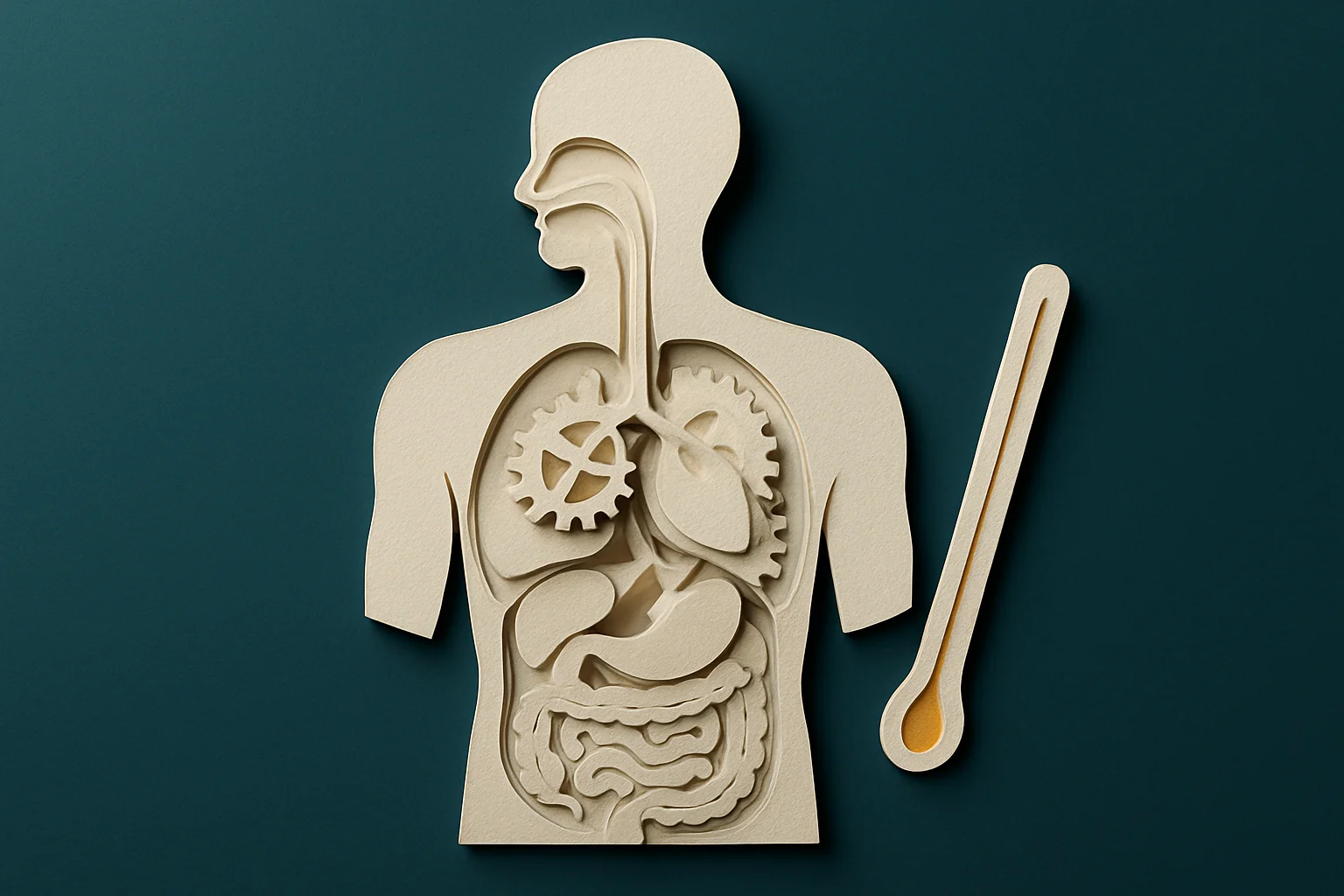
Homeostasis Quiz: Check Your Knowledge of Balance and Feedback
True / False
True / False
Select all that apply
Select all that apply
Put in order
Put in order
Select all that apply
True / False
True / False
Homeostasis & Feedback Loops: High-Impact Mistakes That Cost Exam Points
Homeostasis questions look simple until they ask you to apply the loop to a real variable (temperature, glucose, osmolarity) and to label roles correctly. These are the recurring errors that reliably produce wrong answers—and the habits that prevent them.
1) Treating a set point as a single “perfect number”
Mistake: Writing that the body keeps temperature or glucose “constant.” Fix: State a set point plus a normal range, and describe responses as reducing the deviation back toward that range. ([openstax.org](https://openstax.org/books/anatomy-and-physiology-2e/pages/1-5-homeostasis?utm_source=openai))
2) Classifying feedback as “good vs. bad” instead of “opposes vs. amplifies”
Mistake: Calling negative feedback “bad” and positive feedback “good.” Fix: Decide by direction: negative feedback opposes the initial change; positive feedback amplifies it to drive a process to completion. ([khanacademy.org](https://www.khanacademy.org/science/hs-bio/x230b3ff252126bb6%3Afrom-cells-to-organisms/x230b3ff252126bb6%3Ahomeostasis/a/homeostasis-and-feedback-loops?utm_source=openai))
3) Mislabeling sensors, control centers, and effectors
- Mistake: Naming an organ (e.g., “pancreas”) without assigning its role. Fix: Answer three prompts: Who detects? (sensor), who compares to the set point? (integrator/control center), who acts? (effector).
- Mistake: Confusing hormones with effectors. Fix: Hormones are signals; target tissues (liver, kidney tubules, sweat glands, skeletal muscle) are effectors.
4) Switching the controlled variable with the response
Mistake: Saying “sweating is regulated” instead of “core temperature is regulated.” Fix: Write the controlled variable first (e.g., core temperature), then list responses (sweating, vasodilation) as mechanisms that change it. ([ncbi.nlm.nih.gov](https://www.ncbi.nlm.nih.gov/books/NBK507838/?utm_source=openai))
5) Forgetting how positive feedback stops
Mistake: Listing childbirth or clotting without the stopping condition. Fix: Always name the terminating event (delivery of the baby; sealing of the wound) that ends the amplifying cycle. ([khanacademy.org](https://www.khanacademy.org/science/hs-bio/x230b3ff252126bb6%3Afrom-cells-to-organisms/x230b3ff252126bb6%3Ahomeostasis/a/homeostasis-and-feedback-loops?utm_source=openai))
Homeostatic Control in A&P: 5 Takeaways to Apply to Graphs, Hormones, and Scenarios
Strong performance on homeostasis items comes from a repeatable method: identify the variable, determine the direction of deviation, and map roles in the loop before you chase organ names. Use these takeaways as a checklist while reviewing missed questions.
-
Start every problem by naming the controlled variable and its direction of change.
Write a one-line setup such as “plasma osmolarity is above set point” or “blood glucose is below set point.” This prevents role-reversal errors when you later assign hormones and effectors. ([ncbi.nlm.nih.gov](https://www.ncbi.nlm.nih.gov/sites/books/NBK559138/?utm_source=openai))
-
Classify feedback by the response’s effect on the deviation, not by outcome.
If the response pushes the variable back toward the set point, it’s negative feedback; if it increases the deviation to accelerate completion of a specific event, it’s positive feedback. Use the verbs “opposes” or “amplifies” in your explanation. ([khanacademy.org](https://www.khanacademy.org/science/hs-bio/x230b3ff252126bb6%3Afrom-cells-to-organisms/x230b3ff252126bb6%3Ahomeostasis/a/homeostasis-and-feedback-loops?utm_source=openai))
-
Use the same five-slot template to label any loop.
Stimulus → sensor → control center (integrator) → effector → response. On AP Biology–style items, points are often tied to correct placement of the integrator and the effector, even if your hormone name is correct. ([openstax.org](https://openstax.org/books/anatomy-and-physiology-2e/pages/1-5-homeostasis?utm_source=openai))
-
Anchor hormone questions to the variable the hormone changes.
For glucose: insulin drives glucose into cells (blood glucose falls) while glucagon mobilizes glucose (blood glucose rises). For osmolarity/volume: ADH primarily conserves water; aldosterone primarily conserves sodium (and water follows). Treat these as variable-centered cause–effect statements, not memorized word pairs. ([ncbi.nlm.nih.gov](https://www.ncbi.nlm.nih.gov/sites/books/NBK559138/?utm_source=openai))
-
Interpret “set point shifts” as a different question than “deviation correction.”
Fever is a classic trap: pyrogens can raise the hypothalamic set point, so chills and shivering may occur even when measured temperature is rising—because the body is below the new set point. ([ncbi.nlm.nih.gov](https://www.ncbi.nlm.nih.gov/books/NBK507838/?utm_source=openai))
Authoritative Homeostasis Study Resources (Textbook + Medical References)
- OpenStax Anatomy & Physiology 2e — 1.5 Homeostasis — Clear diagrams of negative feedback steps, set points, and physiological examples aligned with intro A&P coursework. ([openstax.org](https://openstax.org/books/anatomy-and-physiology-2e/pages/1-5-homeostasis?utm_source=openai))
- OpenStax Biology 2e — 33.3 Homeostasis — Organism-level framing of homeostatic regulation and feedback mechanisms; useful for AP Biology-style interpretations. ([openstax.org](https://openstax.org/books/biology-2e/pages/33-3-homeostasis?utm_source=openai))
- Khan Academy — Homeostasis and feedback loops — Concise explanations that emphasize “opposes vs. amplifies,” with worked biological examples and diagrams. ([khanacademy.org](https://www.khanacademy.org/science/hs-bio/x230b3ff252126bb6%3Afrom-cells-to-organisms/x230b3ff252126bb6%3Ahomeostasis/a/homeostasis-and-feedback-loops?utm_source=openai))
- NCBI Bookshelf (StatPearls) — Physiology, Homeostasis — Medical-level overview of homeostatic control across systems, including osmolar and acid–base contexts. ([ncbi.nlm.nih.gov](https://www.ncbi.nlm.nih.gov/sites/books/NBK559138/?utm_source=openai))
- Physiology Education (PMC) — A physiologist’s view of homeostasis — Deeper discussion of how instructors model homeostasis and why students commonly misapply the concept. ([pmc.ncbi.nlm.nih.gov](https://pmc.ncbi.nlm.nih.gov/articles/PMC4669363/?utm_source=openai))
Homeostasis & Feedback Loop FAQ for AP Biology and Intro A&P
How do I quickly tell what the controlled variable is in a word problem?
Look for the quantity the body is trying to keep within a normal range: temperature, blood glucose, blood pressure, plasma osmolarity, pH, or calcium concentration. Actions like sweating, shivering, increased ventilation, or hormone release are usually responses, not the controlled variable.
What’s the fastest way to label “sensor” vs. “control center” vs. “effector”?
Use role-based questions: sensor detects the change (e.g., thermoreceptors, osmoreceptors); control center compares to a set point and issues commands (often hypothalamus or endocrine pancreas); effector executes the change (sweat glands, blood vessels, liver, kidney tubules, skeletal muscle). If you want a quick refresher on muscle structures as effectors, the muscle origin and insertion quiz can help ground the anatomy.
Why is childbirth (or blood clotting) called positive feedback if it’s part of “keeping balance”?
Positive feedback isn’t about maintaining a stable value; it’s about rapidly completing a specific event. In labor, contractions stimulate signals that intensify contractions; in clotting, activated factors accelerate additional activation. The loop ends when an external stopping condition occurs (delivery; clot sealing the wound).
How do insulin and glucagon fit into a negative feedback loop for blood glucose?
When blood glucose rises above the set point, pancreatic beta cells increase insulin secretion, and effectors (liver, muscle, adipose) remove glucose from the blood. When blood glucose falls below the set point, alpha cells increase glucagon secretion, and effectors raise blood glucose by mobilizing stored fuels.
Why do fever questions feel “backwards” (chills when temperature is rising)?
Many fever scenarios involve a set point shift, not a failure of negative feedback. If the hypothalamic set point is raised, the body can be below the new target even while measured temperature is climbing—so shivering and vasoconstriction make sense as negative-feedback responses to the new set point. ([ncbi.nlm.nih.gov](https://www.ncbi.nlm.nih.gov/books/NBK507838/?utm_source=openai))
What should I do when a graph overshoots the set point—does that mean positive feedback?
Not necessarily. Negative feedback systems can overshoot due to time delays, strong effectors, or lag between hormone release and target-tissue response. Decide by mechanism: if the response is designed to reduce the deviation, it’s still negative feedback even if the curve oscillates around the set point.